Introduction: Taking Your Travel Photography to New Heights
Travel photography has reached extraordinary new heights with the advent of drone technology. These flying cameras offer amateur and professional photographers the ability to capture breathtaking aerial perspectives that were once impossible without expensive helicopter rides or specialized equipment. Today’s best drones for travel photography combine portability, high-resolution cameras, and intuitive controls to help you document your adventures from entirely new angles.
Whether you’re looking to photograph sweeping landscapes and ancient historical sites from above or create immersive travel content, the right drone can transform your photography portfolio. But with countless options on the market ranging from budget-friendly to professional-grade, how do you choose the best drone for travel photography? This comprehensive guide explores essential features, top recommendations, and expert tips to ensure you select the perfect aerial companion for your next adventure.
Why Drones Have Revolutionized Travel Photography
Drone photography has quickly evolved from a niche hobby to an essential tool in the modern travel photographer’s kit. Here’s why drones have become indispensable for capturing memorable travel moments:
Unique Aerial Perspectives
Drones allow you to capture previously inaccessible images from heights and angles, revealing invisible patterns, textures, and compositions from ground level. From directly overhead “top-down” shots to sweeping landscape panoramas, drones unlock creative possibilities to make your travel photography stand out.
Unmatched Versatility
Drones can adapt to virtually any environment, whether you’re documenting vast desert landscapes, lush tropical coastlines, architectural wonders, or bustling cityscapes. This versatility makes them perfect companions for diverse travel destinations.
Enhanced Storytelling
Aerial imagery adds depth and context to your travel narrative, helping viewers understand the scale and setting of your adventures. Combining ground-level shots with drone footage creates a complete visual story of your journey.
Increased Accessibility
Modern travel drones feature user-friendly controls, automated flight modes, and intelligent obstacle avoidance, making aerial photography accessible even to beginners. You no longer need a skilled pilot to capture professional-quality aerial imagery.
For a deeper understanding of fundamental drone photography techniques, check out our complete guide to drone photography basics.
Key Features to Look for in Travel Photography Drones
When selecting the ideal drone for travel photography, these critical features will determine both your experience in the field and the quality of your final images:
Portability and Design
For travelers, a drone’s size and weight are paramount considerations. Look for compact, foldable designs that easily fit a backpack without sacrificing camera quality or flight performance. Ultraportable drones like the DJI Mini series weigh under 250g, while slightly larger options like the Mavic Air 2 offer more features while remaining travel-friendly.
Camera Quality and Capabilities
The camera is arguably the most important component of a travel photography drone. Key specifications to evaluate include:
- Sensor size: Larger sensors (1-inch or above) capture more light and detail
- Resolution: Look for at least 12MP for photos and4K for video
- Bit depth: Higher bit depth (10-bit or 12-bit) provides more flexibility in post-processing
- Adjustable aperture: Allows for greater creative control in different lighting conditions
- Gimbal stabilization: 3-axis gimbals ensure smooth footage even in windy conditions
Flight Time and Battery Life
Longer flight times mean more opportunities to capture the perfect shot without constantly landing to swap batteries. The best travel drones offer:
- 20-35 minutes of flight time per battery for consumer models
- Intelligent battery management systems that display remaining flight time
- Quick-charging capabilities for faster turnaround between flights
- Low-battery return-to-home features for safety
Transmission Range and Signal Quality
A strong, reliable connection between your controller and drone is essential, especially when flying in remote locations. Look for:
- Minimum 5-8km transmission range for exploring vast landscapes
- Enhanced signal technology that maintains connection in challenging environments
- High-definition live view feed (at least 720p) to properly frame your shots
Intelligent Flight Features
Modern drones include automated flight modes that can dramatically simplify capturing complex shots:
- Orbit/Point of Interest: Automatically circles a subject
- Waypoints: Programs a predetermined flight path
- Follow Me: Tracks and follows a moving subject
- Hyperlapse/Timelapse: Creates dynamic time-lapse sequences
- QuickShots: Pre-programmed cinematic movements for dramatic footage
Wind Resistance and Stability
Travel often means encountering varied weather conditions. A drone’s ability to maintain stability in winds is crucial for sharp images and safe flying. Professional-grade drones typically handle winds up to 20-25 mph, while consumer models may be limited to 15-20 mph.
Top 5 Drones for Travel Photography in 2025
After extensive testing and research, we’ve identified the five best drones for travel photography across different price points and use cases:
The Ultimate All-Around Travel Drone
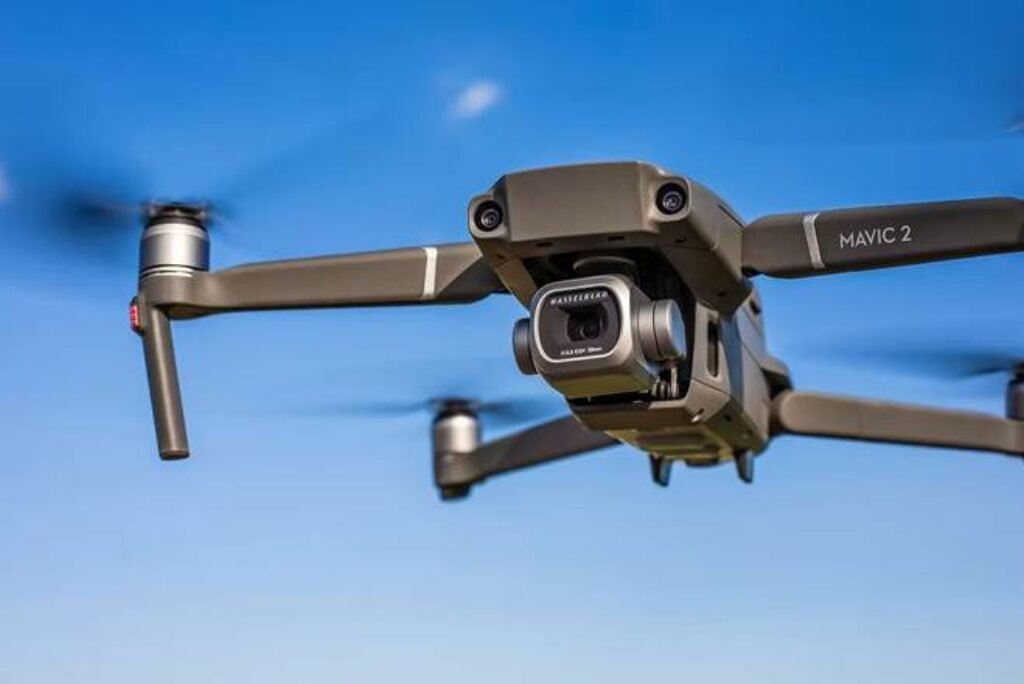
The DJI Mavic 3 Pro represents the pinnacle of portable drone technology for serious travel photographers. This flagship folding drone combines exceptional image quality with advanced features in a travel-friendly package.
Key Features:
- Camera System: Hasselblad 4/3 CMOS sensor with 20MP resolution
- Video Capabilities: 5.1K/50fps and 4K/120fps with 10-bit D-Log color profile
- Flight Performance: 46 minutes of flight time in ideal conditions
- Intelligent Features: Advanced obstacle avoidance in all directions
- Portability: Foldable design weighing 895g (under 2 lbs)
- Transmission: O3+ video transmission with 15km range and 1080p live feed
Perfect For: Professional travel photographers and content creators seeking the highest image quality in a portable package.
Price Range: $1,999-$2,499 depending on the bundle
Best Ultralight Travel Drone
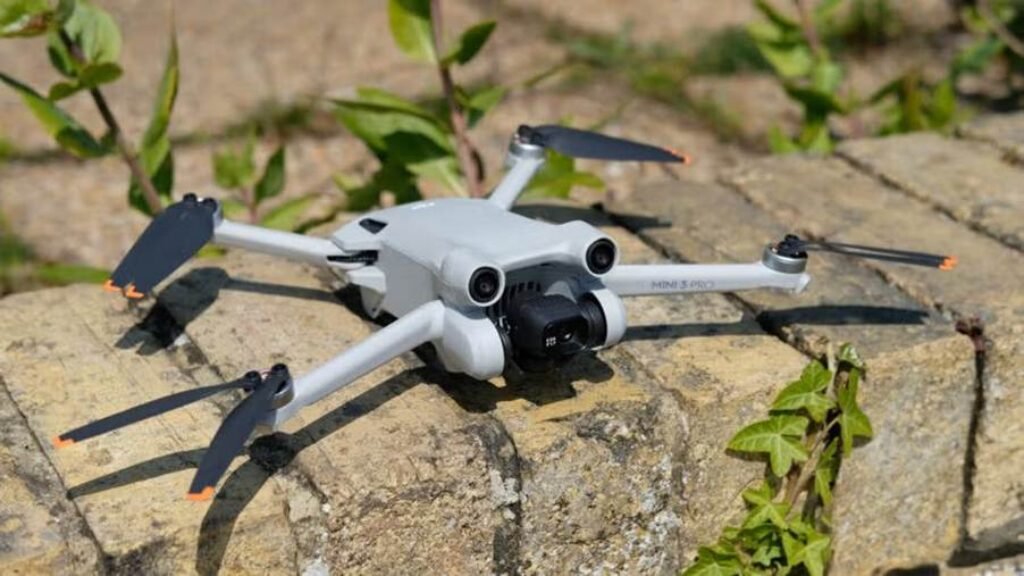
Weighing just 249 grams, the DJI Mini 3 Pro falls under drone registration requirements in many countries while delivering impressive image quality and flight performance. Its incredibly compact design makes it the ultimate travel companion.
Key Features:
- Camera System: 1/1.3″ CMOS sensor with 48MP resolution
- Video Capabilities: 4K/60fps with HDR support
- Flight Performance: 34 minutes with standard battery (47 minutes with extended battery)
- Intelligent Features: Subject tracking and tri-directional obstacle sensing
- Portability: Ultra-compact folding design under 250g
- Transmission: O2 video transmission with 12km range
Perfect For: Travel photographers prioritizing minimum weight and maximum portability without sacrificing image quality.
Price Range: $759-$949 depending on controller option
Best DJI Alternative with Superior Low-Light Performance
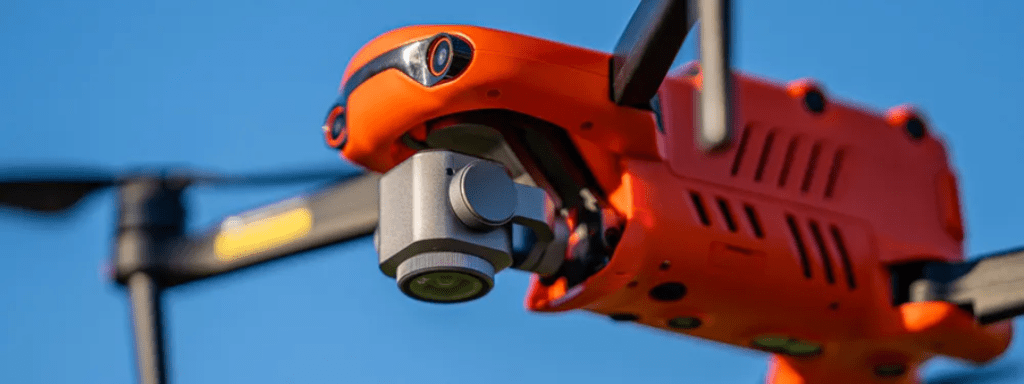
The Autel Evo Lite+ stands out with its exceptional low-light performance and adjustable aperture. It is ideal for travel photographers who often shoot during the golden hour or in challenging lighting conditions.
Key Features:
- Camera System: 1″ CMOS sensor with 20MP resolution and adjustable f/2.8-f/11 aperture
- Video Capabilities: 6K/30fps with 10-bit color
- Flight Performance: 40 minutes of flight time
- Intelligent Features: Dynamic tracking and PDAF+CDAF focusing system
- Portability: Foldable design weighing 835g
- Transmission: Autel SkyLink with 12km range and 1080p live feed
Perfect For: Photographers prioritizing low-light performance and wanting a viable alternative to DJI products.
Price Range: $1,349-$1,549 depending on the bundle
4. DJI Air 2S
Best Mid-Range Value for Travel Photography
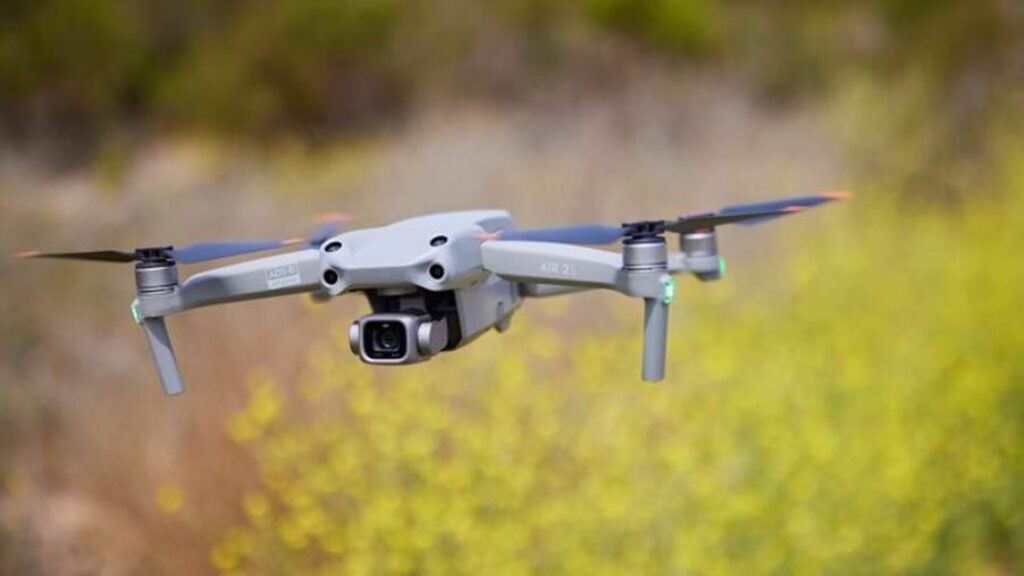
The DJI Air 2S balances professional image quality with reasonable pricing. It features a 1-inch sensor in a compact, travel-friendly design and offers perhaps the best value proposition for serious travel photographers.
Key Features:
- Camera System: 1″ CMOS sensor with 20MP resolution
- Video Capabilities: 5.4K/30fps and 4K/60fps with 10-bit D-Log
- Flight Performance: 31 minutes of flight time
- Intelligent Features: Master Shots automated filming and four-directional obstacle sensing
- Portability: Foldable design weighing 595g
- Transmission: O3 video transmission with 12km range
Perfect For: Enthusiast travel photographers seeking professional image quality without flagship pricing.
Price Range: $999-$1,299 depending on bundle
Comparison Table: Travel Photography Drone Specifications
| Drone Model | Weight | Sensor Size | Max Resolution | Flight Time | Transmission Range | Price Range |
| DJI Mavic 3 Pro | 895g | 4/3″ CMOS | 20MP / 5.1K video | 46 min | 15km | $1,999-$2,499 |
| DJI Mini 3 Pro | 249g | 1/1.3″ CMOS | 48MP / 4K video | 34 min | 12km | $759-$949 |
| Autel Evo Lite+ | 835g | 1″ CMOS | 20MP / 6K video | 40 min | 12km | $1,349-$1,549 |
| DJI Air 2S | 595g | 1″ CMOS | 20MP / 5.4K video | 31 min | 12km | $999-$1,299 |
Expert Tips for Capturing Stunning Drone Travel Photography
Mastering drone photography requires both technical knowledge and creative vision. These tips will help you maximize your drone’s capabilities and capture memorable travel images:
Pre-Flight Planning and Preparation
- Research Local Regulations: Use apps like Airmap or B4UFLY to check flight restrictions before traveling.
- Scout Locations Digitally: Explore potential shooting spots using Google Earth to identify interesting patterns and compositions.
- Plan Around Weather and Light: Schedule golden-hour flights for dramatic lighting and monitor wind forecasts for optimal conditions.
- Create a Shot List: Develop a specific plan for the shots you want to capture to maximize your limited battery life.
Composition Techniques for Aerial Photography
- Look for Leading Lines: Roads, rivers, and shorelines create natural lines that draw the viewer’s eye through your image.
- Explore Symmetry and Patterns: Aerial perspective reveals symmetrical compositions and repeated patterns invisible from ground level.
- Include Scale References: Add human elements or recognizable objects to provide a sense of scale to vast landscapes.
- Apply the Rule of Thirds: Position key elements along the grid lines or at their intersections for balanced compositions.
- Experiment with Altitude: Try shooting from different heights to find the most impactful perspective for your subject.
Camera Settings and Technical Considerations
- Shoot in RAW Format: Capture maximum detail and flexibility for post-processing.
- Use ND Filters: Control exposure in bright conditions and achieve motion blur effects for water or moving subjects.
- Monitor Histogram: Check your exposure using the histogram rather than relying on the screen preview.
- Bracket Exposures: In high-contrast scenes, capture multiple exposures to blend in post-processing.
- Optimize ISO Settings: Keep ISO as low as possible (100-400) to minimize noise, especially with smaller sensor drones.
- Leverage AEB (Auto Exposure Bracketing): Use this feature for HDR photography in challenging lighting conditions.
Advanced Flight Techniques
- Master Manual Flight Control: Practice precise movements to execute complex shots with smooth camera motion.
- Utilize Intelligent Flight Modes: Experiment with automated modes like orbit, dronie, and waypoints for cinematic effects.
- Try Panorama Stitching: Capture multiple overlapping images to create high-resolution panoramas of vast landscapes.
- Experiment with Long Exposure: Use longer exposures to capture light trails or smooth water surfaces in low-light conditions.
- Practice “Reveal” Movements: Slowly rising or backing away from subjects creates dramatic reveal shots that showcase context.
Post-Processing Tips for Drone Travel Photography
Post-processing is essential for transforming raw drone footage into polished, professional images. Here are key techniques for enhancing your aerial photography:
Color Grading and Exposure
- Adjust White Balance: Correct color casts, especially in challenging lighting conditions.
- Develop a Consistent Style: Create a signature look for your travel portfolio through color grading.
- Use Graduated Filters: Balance exposure between bright skies and darker landscapes.
- Apply Split Toning: Add complementary colors to highlights and shadows for more depth.
- Preserve Detail: Be careful not to clip highlights or shadows, especially in high-contrast aerial scenes.
Perspective and Distortion Correction
- Straighten Horizons: Ensure horizons are perfectly level for professional-looking results.
- Correct Lens Distortion: Fixes any barrel or pincushion distortion common in wide-angle drone lenses.
- Adjust Perspective: Correct converging lines or perspective issues using transform tools.
- Crop Strategically: Remove distracting elements and strengthen composition through deliberate cropping.
Advanced Editing Techniques
- Focus Stacking: Combine multiple images with different focus points for maximum sharpness.
- Exposure Blending: Merge differently exposed images to capture detail in highlights and shadows.
- Panorama Stitching: Create ultra-high-resolution images by combining multiple shots.
- Selective Adjustments: Use radial or gradient filters to draw attention to specific areas of your image.
- Removal of Distractions: Clean up power lines, temporary structures, or other unwanted elements.
Drone Maintenance and Travel Tips
Proper care and maintenance of your drone are essential, especially when traveling to remote locations. Follow these guidelines to ensure your equipment remains in optimal condition:
Pre-Trip Preparation
- Firmware Updates: Install all available updates before departure.
- Spare Parts Kit: Pack extra propellers, cables, and other easily damaged components.
- Battery Maintenance: Charge all batteries to 50-60% for storage during transit.
- Secure Memory Cards: Bring multiple high-speed, high-capacity cards to avoid running out of storage.
- Protective Case: Invest in a quality hard case with custom foam inserts for maximum protection.
On-Location Care
- Pre-Flight Inspection: Check propellers, motors, and gimbal for damage before each flight.
- Clean Sensors: Keep the visual positioning sensors and obstacle avoidance cameras clean.
- Battery Management: Store batteries in temperature-controlled environments and avoid extreme heat or cold.
- Gimbal Protection: Always use the gimbal lock during transport to prevent damage.
- Weather Protection: Keep your drone dry and protected from dust, sand, and moisture.
Travel-Specific Considerations
- Carry-On vs Checked: Always carry your drone and batteries in cabin luggage; never check them.
- Battery Restrictions: Research airline regulations regarding LiPo batteries before travel.
- Customs Documentation: Consider bringing proof of purchase and drone registration information.
- Insurance Options: Explore travel insurance that specifically covers drone equipment.
- Charging Infrastructure: Pack appropriate adapters and consider portable power banks for remote locations.
Legal and Ethical Drone Photography Guidelines
Responsible drone operation is about following laws and respecting communities, environments, and fellow travelers. Adhere to these principles for ethical drone photography:
Know and Follow Local Regulations
- Research Country-Specific Laws: Drone regulations vary significantly between countries and regions.
- Registration Requirements: Many countries require drone registration, even for tourists.
- No-Fly Zones: Respect restricted areas around airports, government buildings, and critical infrastructure.
- Altitude Limits: Most countries restrict drone flights to 400ft/120m above ground level.
- Visual Line of Sight: Unless otherwise specified, maintain visual contact with your drone.
Environmental Responsibility
- Wildlife Protection: Maintain a significant distance from wildlife to avoid causing stress or behavioural changes.
- Sensitive Ecosystems: Be cautious in fragile environments like wetlands or protected natural areas.
- Noise Pollution: Minimize flight time in quiet natural settings to avoid disturbing wildlife and other visitors.
- Leave No Trace: Never land in sensitive areas your drone could damage.
Cultural Sensitivity
- Sacred Sites: Many cultural and religious sites prohibit drone use out of respect.
- Local Communities: Seek permission before flying over private property or populated areas.
- Privacy Considerations: Avoid capturing identifiable images of people without consent.
- Cultural Events: Request permission before documenting ceremonies or gatherings.
Safety First Approach
- Pre-Flight Assessment: Always evaluate risks before takeoff.
- Weather Conditions: Never fly in high winds, rain, snow, or fog.
- Battery Management: Land with at least 25% battery remaining as a safety margin.
- Emergency Procedures: Know how to execute emergency landings and return-to-home functions.
Frequently Asked Questions About Travel Drones
What’s the best drone for beginners who travel?
The DJI Mini 3 Pro is ideal for beginners who travel. It combines user-friendly controls with excellent image quality in an ultralight package under 250g. This weight class often has fewer regulatory restrictions, making it perfect for international travel.
How do I travel internationally with a drone?
Research drone regulations for each country you’ll visit. Carry batteries in your hand luggage (never checked bags). Bring documentation showing ownership and registration. Consider a customs carnet for expensive equipment. Always pack your drone in a protective case.
Which drone has the best battery life for travel photography?
The DJI Mavic 3 Pro offers the longest flight time at approximately 46 minutes under ideal conditions. For extended sessions, consider carrying multiple batteries or models with quick-charging capabilities.
Are budget drones worth it for travel photography?
While budget drones (<$500) have improved dramatically, they typically compromise on image quality, stability, and intelligent features. For memorable travel photography, we recommend investing in at least a mid-range model like the DJI Mini 3 Pro for significantly better results.
How can I protect my drone when traveling to harsh environments?
Use a waterproof hard case with custom foam inserts for transport, apply lens filters in dusty or bright conditions, bring a landing pad for takeoffs from sand or dirt, consider propeller guards for confined spaces, and always keep silica gel packets in your case to manage humidity.
What drone accessories are essential for travel photography?
Must-have accessories include extra batteries, a multi-battery charging hub, a set of ND filters, a tablet or phone hood for bright conditions, a landing pad, and a quality hard case. For extended trips, add a portable power bank and extra propellers.
Conclusion: Elevating Your Travel Photography with Drones
Drone photography has transformed how we document our travels, offering perspectives that capture destinations’ true scale and beauty worldwide. Whether you’re an aspiring travel photographer or a seasoned professional, adding a quality drone to your kit opens up creative possibilities that were once unimaginable.
When selecting your travel drone, carefully balance your specific needs for portability, image quality, flight time, and intelligent features. The perfect drone for your travels is one that you’ll bring with you and feel confident operating in diverse environments.
Remember that responsible drone operation is essential for preserving access to aerial photography worldwide. By following local regulations, respecting privacy and natural environments, and flying with consideration for others, you contribute to a positive perception of drone photography that benefits the entire community.
We hope this guide helps you select the perfect aerial companion for your next adventure. Explore our articles below for more tips on travel photography equipment and techniques.
Last Updated: March 2025
This guide was developed after testing 15+ travel drones across various environments and consulting with professional aerial photographers.
Related Articles