The Evolution of Drones: From Military Origins to Everyday Technology
Unmanned aerial vehicles (UAVs), commonly known as drones, have transformed remarkably from their military beginnings to become versatile tools integrated into our daily lives. This evolution represents one of the most significant technological shifts of the modern era, with applications spanning industries from agriculture to entertainment.
The Historical Development of Drone Technology
The journey of drone technology began in the early twentieth century with pioneering experiments in radio-controlled aircraft. These initial prototypes laid the groundwork for what would eventually become sophisticated unmanned aerial systems. During World War I and World War II, military forces recognized the strategic advantage of unmanned aircraft for reconnaissance missions, allowing them to gather critical intelligence without risking pilots’ lives.
However, it wasn’t until the 1990s that drones gained significant prominence in military operations. The technological advancements of this period—including improved communication systems, miniaturized components, and enhanced control mechanisms—transformed drones into highly effective military assets. These developments coincided with changing warfare dynamics emphasising precision, intelligence gathering, and minimizing casualties.
Military Applications: Redefining Modern Warfare
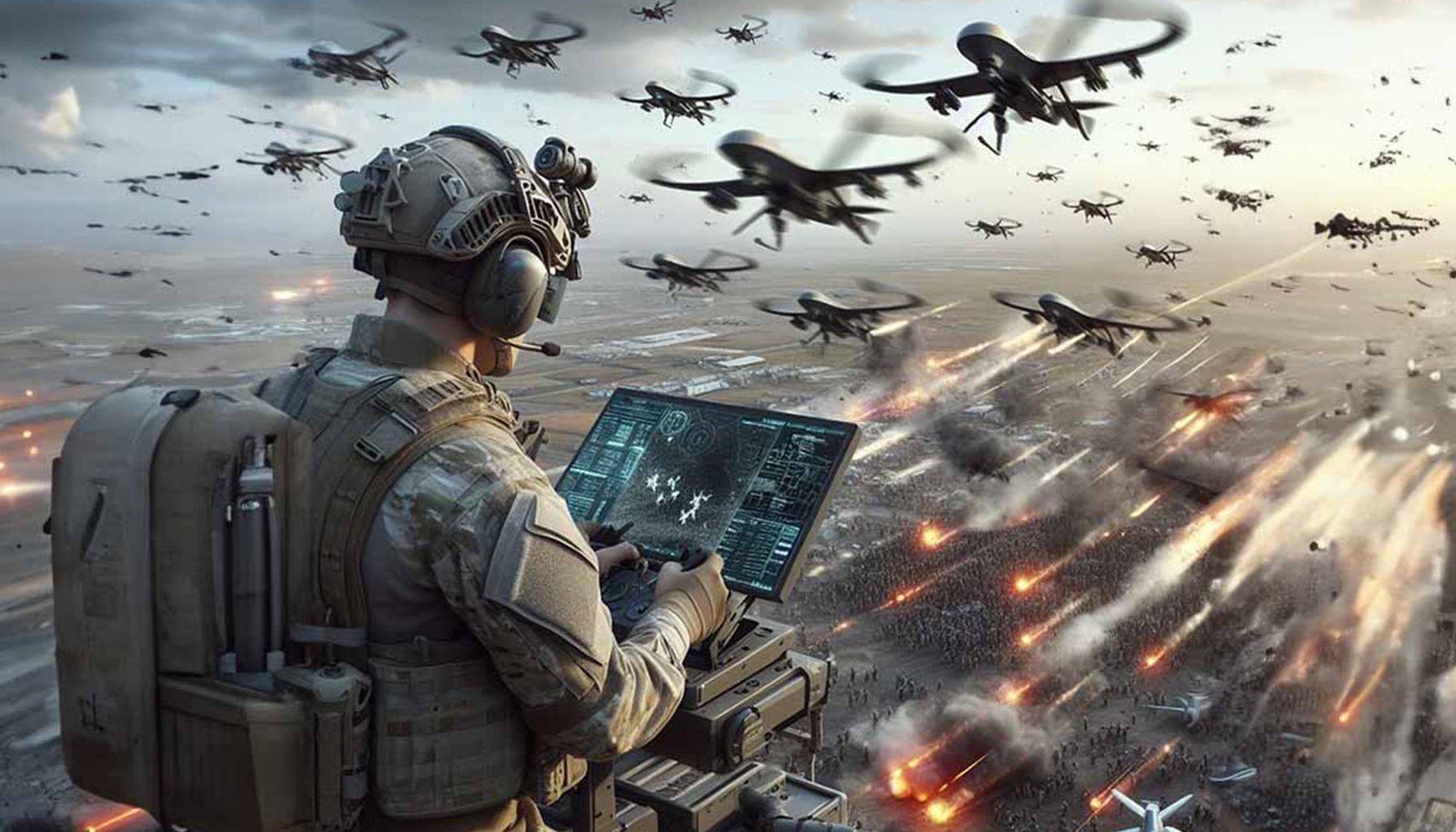
Integrating drones into military operations has fundamentally altered the nature of modern warfare. Armed forces worldwide have deployed drones in conflict zones, including Afghanistan, Iraq, and Syria, for a variety of purposes:
-
Precision strikes: Drones equipped with advanced targeting systems and weaponry allow for highly accurate operations against specific targets, potentially reducing civilian casualties compared to conventional bombing campaigns.
-
Intelligence gathering: Surveillance drones can monitor areas of interest continuously for extended periods, providing military commanders with real-time intelligence.
-
Risk reduction: By removing human pilots from dangerous missions, drones significantly reduce the risk to military personnel, changing the strategic calculus of military operations.
-
Extended operational capacity: Many military drones can remain airborne for durations far exceeding those possible with manned aircraft, enabling persistent surveillance and extended mission capabilities.
These military applications have not been without controversy, with debates continuing about the ethical implications of drone warfare, questions of sovereignty when conducting cross-border operations, and concerns about the psychological effects on both operators and affected populations.
The Transition to Civilian Applications
The past decade has witnessed a dramatic shift in drone technology from primarily military purposes to widespread civilian applications. Several key factors have fueled this transition:
-
Technological miniaturization: Components have become smaller, lighter, and more energy-efficient, making consumer drones practical.
-
Cost reduction: Mass production and competition have dramatically reduced prices, making drones accessible to individuals and businesses.
-
Improved user interfaces: Modern drones feature intuitive controls that don’t require specialized training.
-
Enhanced capabilities: Today’s drones incorporate sophisticated camera systems, GPS navigation, obstacle avoidance technologies, and extended flight times.
This shift has opened up entirely new markets and use cases previously unimaginable, fundamentally changing how we approach tasks ranging from photography to infrastructure inspection.
The Rise of Consumer Drones
Perhaps the most visible aspect of drone evolution has been the emergence of the consumer drone market. Companies like DJI, Parrot, and Skydio have developed accessible UAVs with high-definition cameras, GPS positioning systems, and automated flight features, allowing even novice users to capture stunning aerial imagery.
These consumer drones have transformed photography and videography, providing perspectives that were once available only to those with access to helicopters or planes. Amateur photographers can now capture breathtaking aerial landscapes, while real estate professionals use drone footage to showcase properties from attractive angles. Social media platforms are filled with drone content that would have been impossible to create just a decade ago.
Beyond photography, recreational drone flying has emerged as a hobby in its own right, with drone racing leagues and competitions attracting participants worldwide. These events showcase modern drones’ remarkable agility and speed, with pilots navigating complex courses using first-person view (FPV) systems that transmit live video feeds from the drone’s perspective.
Commercial and Industrial Applications
The business applications of drone technology extend far beyond entertainment and have revolutionized numerous industries:
Film and Media Production
Professional filmmakers have embraced drones as cost-effective alternatives to helicopter shots and crane systems. From Hollywood blockbusters to independent documentaries, aerial drone footage has become a standard component of visual storytelling, providing dynamic perspectives that enhance narrative impact.
Construction and Infrastructure
In the construction industry, drones conduct site surveys and monitor progress efficiently. They generate detailed 3D maps of construction sites, track changes over time, and identify potential issues before they become costly problems. Similarly, infrastructure inspection—whether of bridges, power lines, wind turbines, or oil pipelines—has been transformed by drones that can safely access difficult-to-reach areas and capture detailed imagery for analysis.
Agriculture and Environmental Monitoring
Drones equipped with multispectral sensors that analyze crop health, soil conditions, and irrigation patterns have revolutionized precision agriculture. These insights allow farmers to optimize resource usage, reduce environmental impact, and increase yields. Environmental researchers use similar technology to monitor ecosystems, track wildlife populations, and assess the impact of climate change.
Logistics and Delivery
Companies including Amazon, UPS, and Zipline are developing drone delivery systems that promise to revolutionize logistics, particularly for last-mile delivery challenges. In remote areas with limited infrastructure, medical delivery drones already transport vaccines, blood samples, and essential medications, saving lives by reducing delivery times from hours or days to minutes.
Public Safety and Emergency Response
Drones have become invaluable tools for first responders. Search and rescue operations use thermal imaging drones to locate missing persons in challenging environments like forests, mountains, or disaster zones. Fire departments deploy drones to assess building fires from above, identify hotspots, and plan safer, more effective responses. Police departments utilize drones for accident scene documentation, crowd monitoring, and situational awareness during critical incidents.
Technological Advancements Driving Future Applications
Several key technological developments are propelling the continued evolution of drone technology:
Artificial Intelligence and Autonomy
Machine learning algorithms enhance drones’ autonomous capabilities, enabling them to navigate complex environments without human guidance. Object recognition systems allow drones to identify and track specific targets, while collision avoidance technologies create safer operation in challenging settings.
Extended Flight Capabilities
Improvements in battery technology and power management systems are extending flight times, while hybrid power systems combining batteries with other energy sources promise even greater endurance. Weatherproofing advancements make drones more reliable in adverse conditions, expanding their operational parameters.
Enhanced Sensors and Payloads
Beyond visual cameras, drones now carry sophisticated sensor arrays, including LiDAR, multispectral imaging systems, gas detectors, and radiation monitors. These expanded capabilities open new applications in archaeology to industrial inspection.
Communication and Networking
5G connectivity enables more reliable drone control and data transmission over greater distances. Mesh networking capabilities allow multiple drones to work together in coordinated swarms, potentially revolutionizing how we approach large-scale tasks like environmental monitoring or search operations.
Regulatory Challenges and Future Directions
As drone technology advances, regulatory frameworks are evolving to balance innovation with safety and privacy concerns. Aviation authorities worldwide have implemented registration requirements, pilot certification programs, and operational restrictions to integrate drones safely into airspace systems.
Privacy concerns remain significant, as drones’ aerial perspective can potentially infringe on personal privacy in ways that weren’t previously possible. Addressing these concerns through technological solutions and regulatory frameworks remains an ongoing challenge.
Security issues present another dimension of drone regulation, with increasing attention paid to preventing drones from being used for malicious purposes or creating hazards near sensitive infrastructure like airports or government facilities.
Despite these challenges, the trajectory of drone technology points toward increasingly seamless integration into everyday life. From urban air mobility concepts that could revolutionize transportation to agricultural systems that optimize food production, drones are poised to become an essential component of modern infrastructure.
Conclusion
The evolution of drones from specialized military technology to versatile tools accessible to businesses and consumers represents a remarkable technological journey. These devices have transformed from experimental concepts to essential tools across numerous industries in just a few decades.
As artificial intelligence, battery technology, and sensor capabilities advance, we can expect drones to become even more capable and integrated into daily operations across sectors. The economic impact of this technology is already substantial and is projected to grow significantly, with market analyses suggesting the global drone market will exceed $40 billion by 2025.
While challenges remain in addressing privacy concerns, regulatory frameworks, and public perception, the benefits of drone technology—from life-saving medical deliveries to environmental conservation efforts—suggest that unmanned aerial vehicles will continue to transition from extraordinary technology to everyday tools. The future of drones appears limited only by human imagination as innovators continue to discover new applications for these remarkable flying platforms.